Journal
Two fragrances, one conversation
Begin with two descriptions and a little space between them; layering can be an exercise in contrast before anything is combined.
Start with each voice
Layering is often described as a way of making something entirely your own. A quieter place to begin is with two fragrances that already interest you separately. Read their notes, notice their differences and decide what you would like the conversation between them to be. There is no need to make the pair agree on everything.
Within this fictional range, the descriptions offer several possible starting points. One fragrance might bring a bright edge while the other provides a softer texture. Another pair might share a woody line but place it in very different light. The useful question is which detail you want to remain clear, rather than how many notes you can bring together.
A bright edge over pale wood
Consider Néroli Soleil beside Cèdre Argent. Néroli Soleil is described through neroli and bergamot, orange blossom, amber and white cedarwood. Cèdre Argent brings bergamot, silver cedar and white musk. On paper, the common citrus opening and pale woods give the two descriptions a point of contact.
The imagined contrast is between blossom and a clearer woody space. You might picture the same room at two different hours: warmer light across the flowers, cooler shade along the floorboards. This is an editorial suggestion, not a tested mixture or a promise about what two physical products would do. Byraldo’s fragrances are fictional, so the pairing belongs to their stories.
Give green notes a softer edge
Figue Blanche and Fleur d’Oranger offer another possible conversation. Fig leaf and white fig suggest a broader, shaded green texture. Mandarin and orange blossom give the second fragrance a brighter floral centre. Coconut milk and cedar sit beneath the fig, while soft amber warms the blossom.
Imagine a garden table half in shade rather than a crowded bowl of fruit. The leaf gives one side of the scene a distinct outline; the blossom changes the air around it. If the description begins to feel busy, return to the simpler question: is it the green leaf or the white flower that you want to notice first? A pair does not have to give both equal emphasis.
A darker conversation
Bois de Minuit beside Thé Fumé is a denser idea. Black pepper, cedarwood and smoked vetiver meet bergamot, lapsang souchong, birch tar and leather. The shared dryness gives the descriptions a connection, while pepper and tea keep their characters separate. This is the pair for imagining a darker room, rather than adding brightness to one.
Another approach is to read Iris Fumé beside Cèdre Argent. Violet leaf, orris root and incense bring powder and shadow towards fine wood and white musk. That contrast feels quieter on the page. Neither pairing is a rule or a measured recommendation, and neither needs an invented claim about strength or duration to make the comparison interesting.
Leave room for a single fragrance
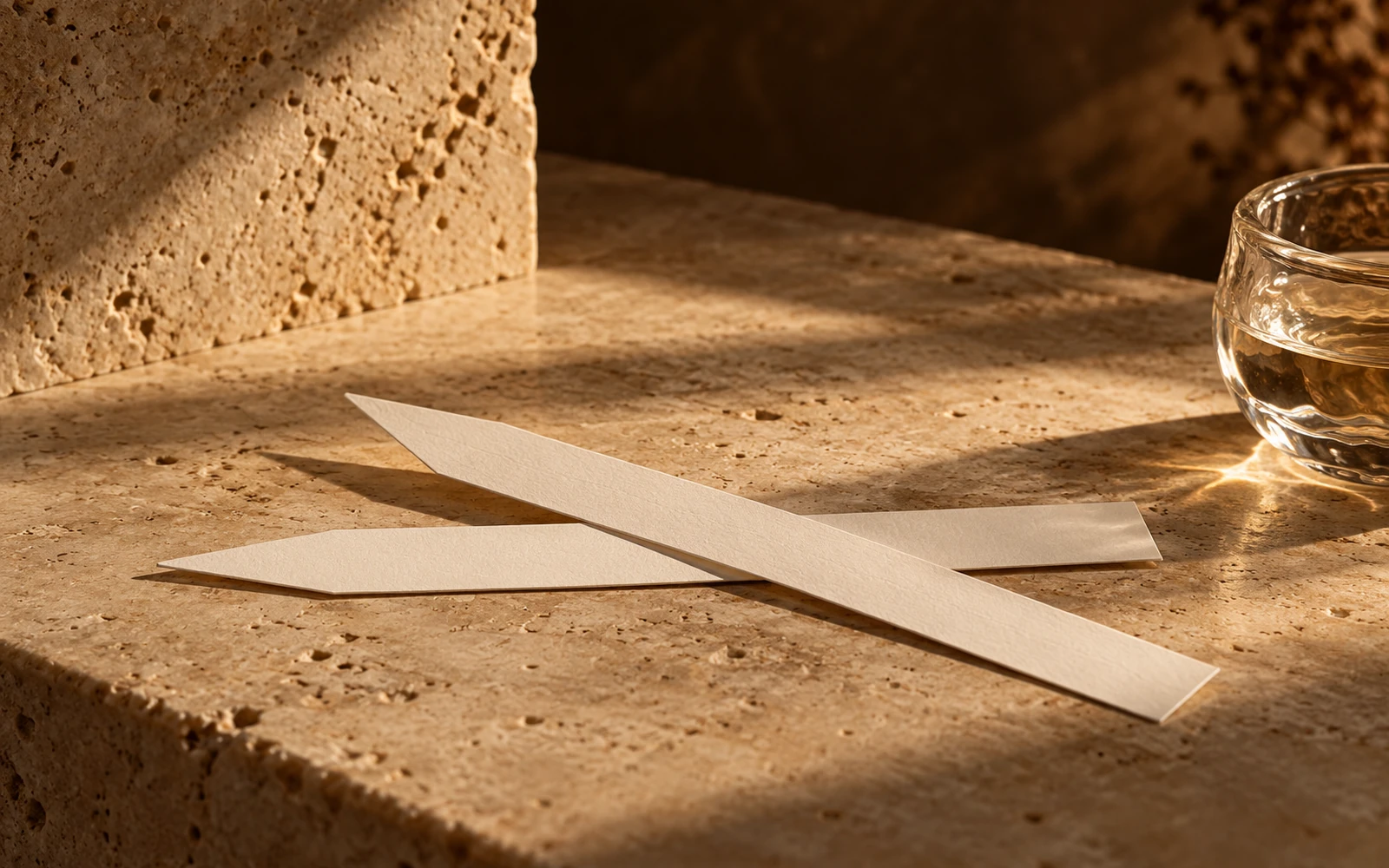
For real fragrances, comparing separate paper strips can be a way to consider a pairing before deciding whether you like the idea together. Follow the product’s own directions rather than treating an editorial story as practical product guidance. Here, you can simply move between the fictional pages and compare their language without applying or mixing anything.
You may find that one description already contains the contrast you wanted. Green fig with creamy softness, or bright bergamot above smoky tea, can make its own conversation. Layering is optional. Sometimes the most useful result of looking at a pair is a clearer preference for one fragrance on its own, with enough space around it to hear what first drew your attention.
Try describing the pair without using either fragrance name. If the idea still feels clear, you have probably found the contrast that interested you: flower against leaf, pale grain against powder, or citrus above a darker cup of tea. If it feels crowded, leave one voice out and read the remaining page again.